
Our Planetary Defense Commitments
Our philosophy for building planetary defense systems in service of humanity.
-
Dr. Brian Murphy, CEO & Founder
Preamble
Planetary defense sits in the crossroads of moral obligation, scientific duty, and global consequence. It is a field built to protect life and the systems that life depends on, yet it necessarily involves technologies that can alter the motion of celestial bodies, operate across national boundaries, and affect the long-term environment of Earth, the usability of orbit and cislunar space, and the viability of future human settlements.
Historically, it is a field led by scientists, public institutions, and international coordination mechanisms — not by private companies.
We fundamentally believe commercial work can accelerate the detection, characterization, interception, and mitigation of natural space hazards. We also understand why scientists, policymakers, and the public may be wary of commercialization in a domain that concerns humanity as a whole.
Planetary defense must not become a race for unilateral control, proprietary opacity, sensationalism, or private authority over shared risks. It must remain grounded in science, public legitimacy, international cooperation, and a sober understanding of the stakes and risks.
This document describes the principles we intend to hold ourselves to as we build Oroff. It is not a marketing slogan, a legal waiver, or a claim that we will always meet our ideals perfectly. It is a public statement of what we believe planetary defense requires of us, what forms of conduct we consider unacceptable, and how we intend to earn trust as a commercial actor in a field that properly belongs to all humanity.
We expect this document to evolve as our company and the international planetary defense community evolves. We will revise it when our understanding improves.
Why Oroff exists
Historically, planetary defense concerned natural objects that threaten Earth’s surface. That mission remains foundational. But human vulnerability is expanding outward. Satellite megaconstellations, AI datacenters, space stations, cislunar infrastructure, lunar surface systems, future lunar bases (Artemis Base Camp), power systems, communications networks, and deep space missions all increase the number of human and economic systems exposed to natural hazards from asteroids, comets, meteoroids, dust streams, and impact ejecta. The initial and cascading loss of any of these systems may result in catastrophic economic losses, and even loss of life, both in space and on Earth.
We believe planetary defense should grow with humanity’s footprint in space.
This means treating space as an operational domain in which natural hazards must be detected, understood, forecast, and, when necessary, mitigated. National entities currently handle the detection, understanding, and forecasting of these hazards, however, the required technological readiness for the scale of future expansion and mitigation is woefully underdeveloped. As a civilization, we must act now to develop these mitigation systems and not wait until the final moment to do so. The same civilization that learns to live beyond Earth must also learn to protect itself beyond Earth.
The commercialization problem
We take seriously the concern that commercializing planetary defense could distort the field.
A company may be tempted to exaggerate threats, overstate readiness, hide data, privatize public-good science, frame risk as certainty, or pursue demonstrations for investors before the scientific and diplomatic foundations are mature.
We reject that path.
Oroff’s commercial thesis is justified only if it adds capability while strengthening — not weakening — the scientific, public, and international foundations of planetary defense. If commercial incentives pull against scientific honesty, mission safety, or legitimate public best-interest, those incentives must be constrained.
Summary of our commitments
Oroff’s work should be governed by four priorities, in roughly this order:
- Planetary safety: We will not pursue missions, products, partnerships, or demonstrations that create disproportionate physical, orbital, geopolitical, scientific, or environmental risk.
- Scientific integrity: We will preserve truth-seeking thought, peer review, reproducibility, and the communicated distinction between demonstrated capability and theoretical aspiration.
- Hardware execution: We will build real systems, not just rhetoric — hardware, software, mission architectures, and operational practices that enable and improve humanity’s ability to understand and respond to natural space hazards anywhere in the Solar System.
- Public good: We will highlight the fact that planetary defense decisions may affect all nations and future generations, and therefore may require coordination beyond any single community, company, or Nation State.
The best planetary defense work strengthens all four priorities in tandem. We foresee futures where some, or all, priorities may be pressured into conflict. Should such a scenario develop, Oroff should be willing to slow down, change course, disclose uncertainty, seek external review, or decline a disproportionately hazardous opportunity.
Our philosophical baseline
Planetary defense is not merely an engineering problem. It is a moral imperative. It demands that humanity asks difficult questions.
We ask how a technologically capable species should respond to rare but severe natural hazards. We ask how we should make decisions under uncertainty. We ask who has the authority to act on behalf of Earth. We ask how to protect present lives and systems without imposing reckless risks on future generations. We ask how to expand planetary defense efforts beyond Earth as humanity expands in-kind. We ask how to build powerful capabilities without letting those capabilities become instruments of destruction, panic, or distrust.
Oroff’s guiding ethos includes:
Protection.
We commit to the purpose of planetary defense — the protection of life, assets, and civilization — not to claim ownership over celestial objects, orbital regions, or strategic decision-making. We will never utilize potential mitigation as coercion.
Rigor.
We believe our planetary defense collaborations should be driven by interactions with the scientific community, evidence, modeling, observations, tests, and peer critique — not by spectacle or investor timelines.
Global.
We accept natural space hazards do not respect national borders, especially in orbit or on the Moon. Decisions with planetary consequences may require international awareness, consultation, and cooperation.
Vision.
We believe that humanity should prepare before crisis arrives, but preparation must not become an excuse for premature, unsafe, or destabilizing action.
Humility.
We act in careful and calibrated steps, not paralysis and timidity. Humility to know our primary scope and to collaborate on planetary defense activities that fall outside it. This underscores our foundational mindset.
Hard constraints
There are lines Oroff should not cross.
We will not knowingly pursue or support any mission, product, or partnership that:
- Attempts to alter the trajectory of a natural celestial body without appropriate legal authorization, scientific review, and international consultation proportionate to the risk.
- Conceals material mission risks from regulators, partners, scientific collaborators, or affected stakeholders.
- Uses planetary defense as a pretext for deploying weapons, coercive systems, or capabilities primarily intended for terrestrial conflict.
- Provides a private actor with unilateral decision authority over a planetary-scale hazard.
- Intentionally misrepresents risk, capability, readiness, scientific consensus, or uncertainty.
- Creates debris, contamination, impact risk, or orbital/cislunar hazards that are disproportionate to the demonstrated safety benefit.
- Undermines legitimate scientific observation, public warning, or international risk communication processes.
These constraints are our fundamental backstops. Most of our work should be guided not by asking “Can we do this?” but by asking “Would this strengthen humanity’s abilities in planetary defense, enabling a more trustworthy, more capable, and more legitimate path forward?”
Scientific integrity
Oroff will always pursue scientific truth and disseminate it without recourse.
We will distinguish between what is demonstrated, what is modeled, what is plausible, and what is aspirational. We will not present early-stage concepts as operational systems, lulling humanity into a false sense of security. We will not imply that a capability exists because a rendering, simulation, or preliminary analysis suggests it could exist.
We will be explicit about assumptions, margins, uncertainties, data limitations, and unresolved technical risks to all requisite stakeholders.
When possible, we will publish or support publication of scientific analyses, technical assumptions, validation data, and mission-relevant findings. When proprietary or security constraints prevent full disclosure, we will seek responsible ways to communicate information to external experts for evaluation of the credibility and implications of our work.
We encourage and respect the role of peer review, independent replication, and scientific criticism. We will not treat external critique as an obstacle to progress. In planetary defense, critique is part of the safety system and de-risking.
We will actively avoid threat inflation. Natural space hazards are real, but they are also statistically structured. The public deserves seriousness, not panic. We will not use low-probability scenarios to irresponsibly manufacture urgency, funding, or political pressure. However, low-probability does not equate inaction and we will always advocate for planetary defense in responsible ways.
Data, transparency, and public trust
Oroff’s default posture should be transparency, improving safety, science, and trust.
We will support timely sharing of observational data relevant to our mitigation of natural space hazards, especially where such data could improve resulting orbit determination, risk assessment, or public scientific understanding. We will fund and encourage collaboration with scientists and observatories to supplement our work and cross-reference mitigation efficiency.
We recognize that not all information can or should be immediately public. Some mission data, spacecraft designs, autonomous response logic, cyber-physical interfaces, or dual-use operational details may require staged disclosure, restricted review, or coordination with appropriate authorities. We will consult with partners, funding agencies, and governmental entities at such times.
We will aim to be clear about:
- what we know;
- what we do not know;
- what we are assuming;
- what has been independently verified;
- what remains speculative;
- what risks a system reduces;
- what risks it may introduce.
Mission conduct
We believe planetary defense capabilities should be built through progressive, reviewable steps: analysis, simulation, component demonstration, full system testing, and flight demonstration. We will build our systems through rapid prototyping and low-cost components, ultimately delivering an ecosystem of off-the-shelf planetary defense systems and missions that agencies, corporations, or alliances may contract.
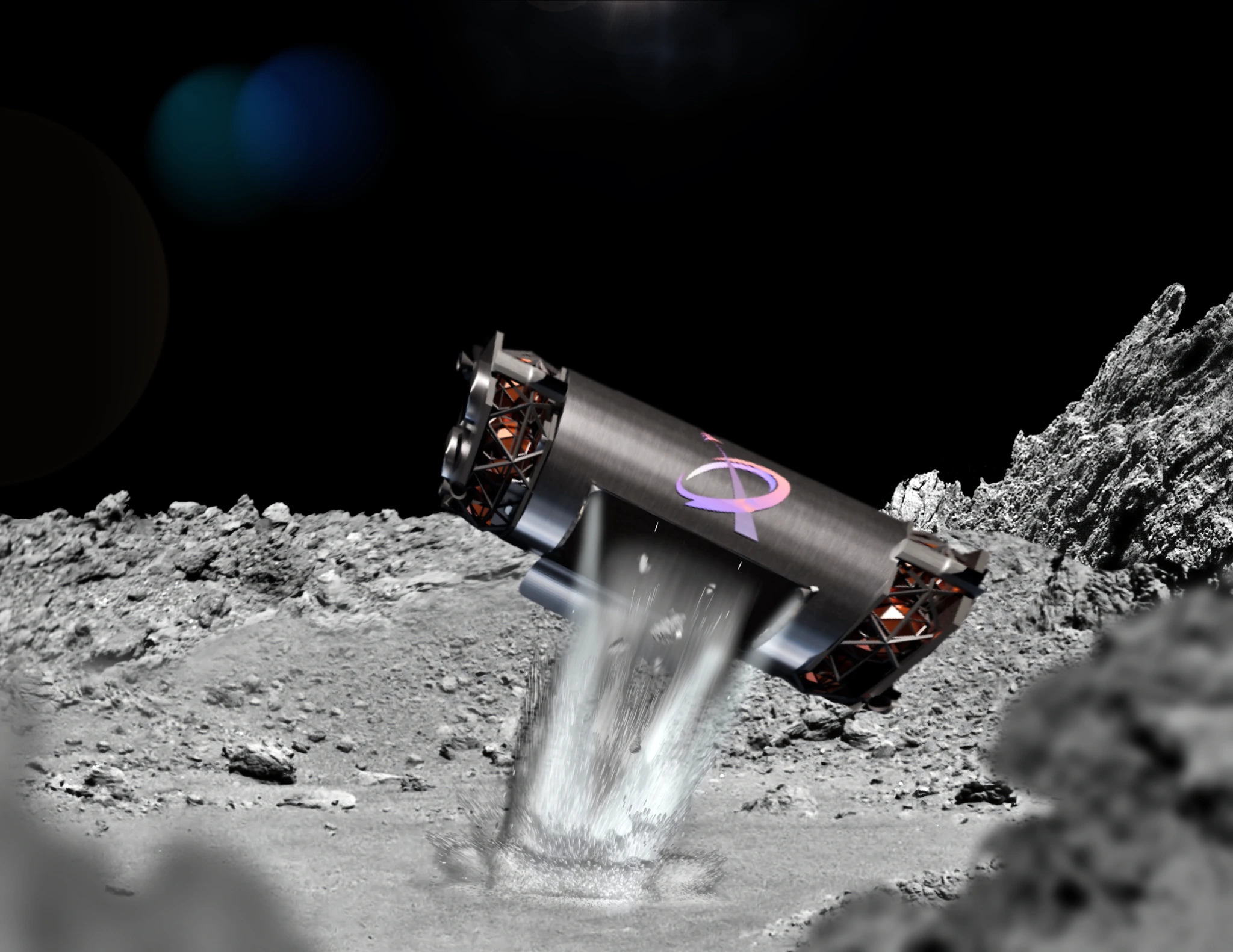
We operate all flight demonstrations under the motto “the more consequential the mission, the higher the burden of proof should be”. When it comes to our first redirection test, LOKI, we will work with all associated authorities and stakeholders to ensure mission success.
Dual-use awareness
Many planetary defense technologies are dual-use.
High-energy systems, autonomous targeting, proximity operations, propulsion, object characterization, interception, and trajectory modification can have applications outside peaceful hazard mitigation. We will therefore assess not only what a system is designed to do, but what it could reasonably enable, normalize, or be repurposed for.
Dual-use risk does not mean such technologies should never be built. It means they should be developed with transparency, controls, constraints, and institutional partnerships appropriate to their power and capability.
We will prefer architectures that make peaceful intent inspectable. We will avoid designs whose main value depends on ambiguity between defense from natural hazards and coercive capability against human-made systems.
International collaboration
Planetary defense is a global domain.
Oroff seeks to work constructively with national space agencies, scientific institutions, international organizations, academic researchers, civil societies, and responsible commercial partners. We will respect and coordinate with existing planetary defense coordination mechanisms, such as IAWN and SMPAG, and will not present ourselves as a substitute for international authority.
We believe international collaboration matters for three reasons.
First, the hazard is shared. A natural object threatening Earth, orbital infrastructure, or cislunar activity may affect many nations regardless of who aims to mitigate it.
Second, the response may create externalities. Deflection, disruption, debris generation, impact prediction, evacuation planning, and public communication can all have consequences beyond the individual actor initiating the response.
Third, legitimacy is part of safety. A technically successful intervention could still be politically destabilizing if conducted without adequate consultation, transparency, or international confidence.
Oroff will therefore build systems that can plug into international processes, not systems that require the world to accept private unilateral action.
Oroff will therefore build systems that can plug into international processes, not systems that require the world to accept private unilateral action.
Naturally, as a U.S.-incorporated company, Oroff’s initial regulatory, contracting, and operational pathway begins with U.S. public agencies and allied institutions. We view this as a beachhead, not a limitation on the broader international legitimacy that planetary defense ultimately requires.
Relationship with governments and public agencies
Public agencies have a legitimate and necessary role in planetary defense.
Oroff seeks to be a capable partner to the U.S. government and international entities, not a replacement for the programs within them. We may build technologies, propose missions, provide data, develop architectures, or operate systems under contract or partnership. But decisions with broad public consequence require public authority, accountability, and coordination.
We will be candid with agencies about technical maturity, uncertainty, and risk. We will not lobby for missions or policies we do not believe are technically and ethically justified.
Where regulations are immature, we will not treat the absence of a rule as permission to proceed without restraint. Novel domains require judgment before they acquire law. We therefore will advocate for and support proposals to expand planetary defense policy.
Relationship with scientists
Oroff should treat the scientific community as a partner, not as a resource to be mined for legitimacy.
We recognize and celebrate that planetary defense rests on decades of work by astronomers, dynamicists, geologists, mission designers, impact physicists, survey teams, software developers, policy experts, and public servants. Commercial companies entering the field inherit the credibility created by that community. We therefore have an obligation not to spend that credibility carelessly.
We commit to the formation of an independent scientific advisory board, and will seek scientific advisors, collaborators, and critics who are empowered to challenge us. Where scientists contribute materially to Oroff’s work, they should receive appropriate credit, authorship, compensation, or institutional recognition.
Oroff aims to open up the Solar System to the eyes, interests, and missions that scientists most desire low-cost, scalable, mission-adaptable spacecraft and data systems. As Oroff’s missions mature, we will seek responsible pathways to share scientifically valuable data with relevant researchers and institutions, enabling a new era of discoveries in small body science and our understanding of the Solar System.
We will never pressure scientists to simplify, exaggerate, or prematurely endorse claims for commercial purposes.
Scientific disagreement should not be treated as disloyalty. In a high-stakes field such as planetary defense, disagreement is a form of deep care and passion about shared goals.
Relationship with the public
The public deserves honesty without condescension.
Planetary defense communication should neither frighten people unnecessarily nor hide serious risks. Oroff will aim to communicate in ways that are understandable, accurate, and proportionate. We will distinguish between routine close approaches, objects requiring monitoring, statistical impact risks, and genuine defense scenarios.
We will not imply that humanity is defenseless. Nor will we imply that technology alone solves the problem. Planetary defense is a system of observation, science, modeling, governance, communication, preparedness, and physical intervention.
The public is our key stakeholder in planetary defense actions, not merely an audience for them.
Investor and partner alignment
Not every source of capital or partnership will be right for Oroff.
We should prefer investors and partners who understand that planetary defense requires trust, patience, scientific rigor, and regulatory maturity. We are taking the first steps in a marathon, not running a 100-yard dash. We should be wary of capital that demands threat inflation, premature demonstrations, reckless timelines, or a pivot toward ambiguous militaristic posturing inconsistent with our purpose. We should align ourselves with capital that embodies our Marathon Mindset.
A planetary defense company cannot be governed only by the fastest path to valuation. It must also be governed by the slower path to reliability and reproducibility. We will always strive to do the right thing.
This does not mean being commercially naive. Oroff must hire the best people, win contracts, grow, and build these capital-intensive systems. But the capital structure should serve the mission, and we must serve humanity.
A living document
This document is a beginning.
We expect parts of it to be incomplete, imprecise, or wrong. We expect future missions, future laws, future scientific discoveries, and future failures — ours or others — to teach us things we do not yet understand.
We therefore intend this document to be revised. Revisions should not be used to quietly lower our standards. They should clarify, strengthen, and update our commitments as we learn.
We invite critique from scientists, engineers, policymakers, ethicists, public agencies, international partners, and the wider public. We will not always agree with every critique, but we should treat serious criticism as a contribution to the safety system we are trying to build.
Final word
Oroff was founded on the belief that humanity should not remain passive before the natural hazards of deep space.
But planetary defense is not only about preventing impacts. It is about becoming the kind of civilization that can see danger clearly, act before catastrophe, and build powerful tools without being destroyed by them. We must protect our species wherever it extends
We do not ask to be trusted because our mission sounds noble. We ask to be judged by whether our conduct and demonstrated capability supports it.