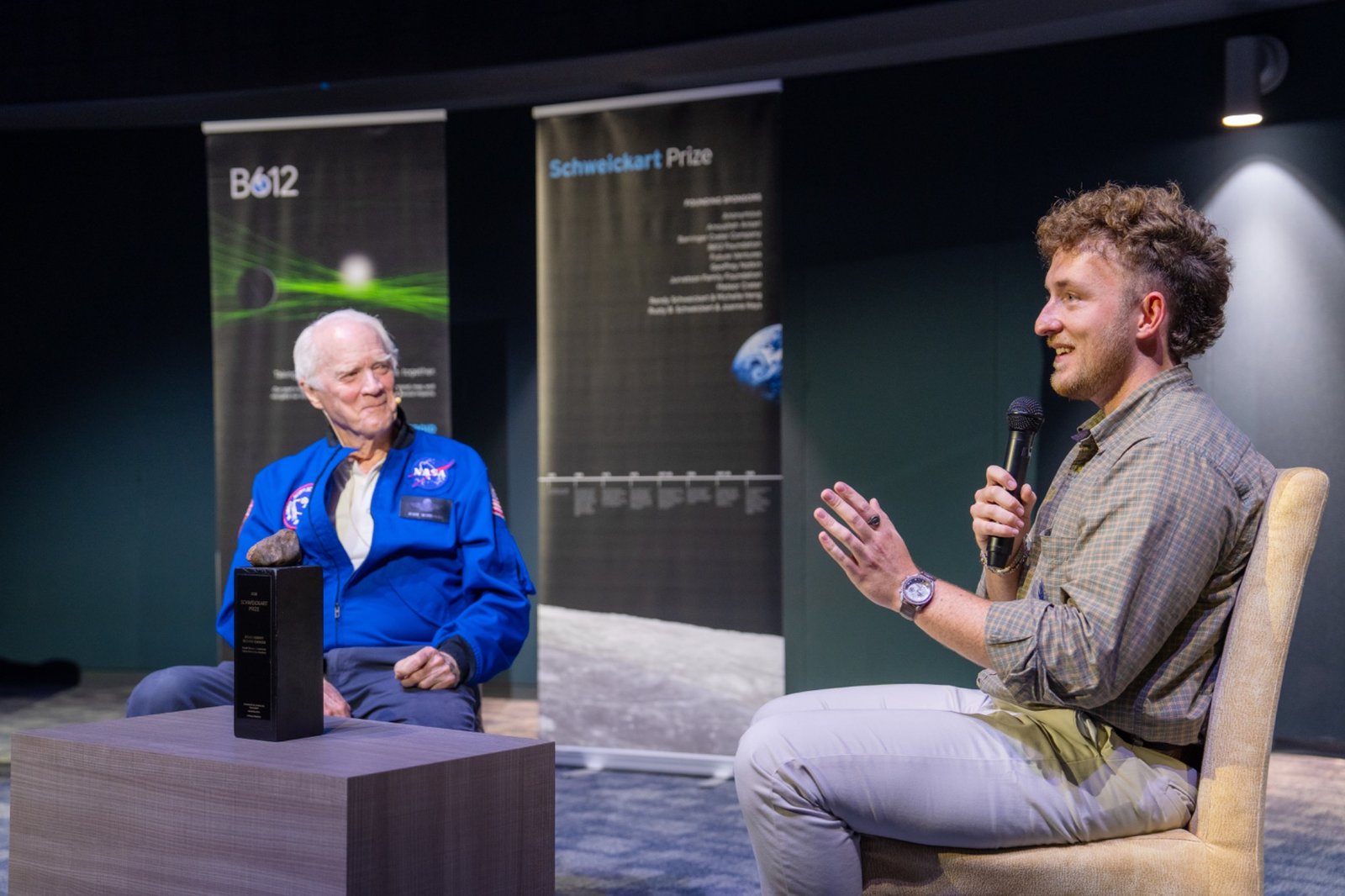
A conversation about the future of planetary defense at the 2026 Schweickart Prize event. Photography: Abe Snider / B612 Foundation.
Science into responsibility
From DART to Oroff. Science into action.
Dr. Brian Murphy founded Oroff to help protect humanity and the infrastructure it depends on as activity expands into space. His work connects observational astronomy, small-body science, and planetary defense with a practical question: how do we understand and prepare for natural hazards wherever we go?
Studying the aftermath of NASA’s DART impact brought that question into focus. Brian’s work on the evolving ejecta connects directly to the mission he is building at Oroff: translating small-body research into environmental intelligence for spacecraft, and exploring the next chapter of planetary defense.
A future worth protecting
Our work seeks to ensure that humanity’s future expansion into space remains safe, sustainable, and resilient.
The path here
DART. Oroff. New frontiers.
2023 / Planetary defense in practice
Following the aftermath of DART.
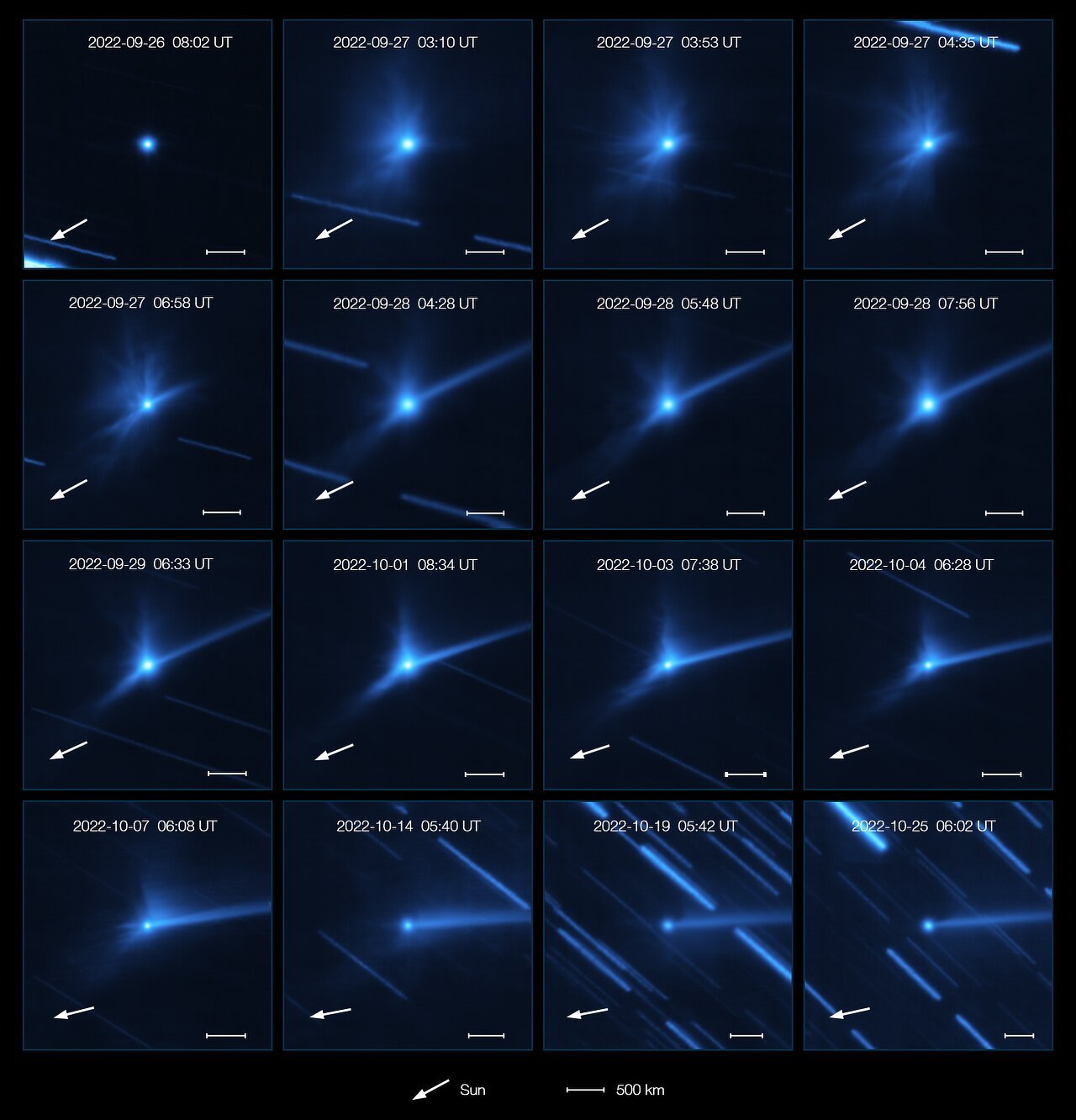
Brian led the paper VLT/MUSE Characterisation of Dimorphos Ejecta from the DART Impact, published in The Planetary Science Journal. The team studied the Didymos–Dimorphos system over 11 nights around and after NASA’s 2022 impact experiment, examining the expanding ejecta cloud, clumps, wings, and debris tails.
The work used both images and spatially resolved spectra to investigate how material evolved following an asteroid-deflection test—an observational connection between planetary science and the development of planetary defense.
2024 onward / Building Oroff
Turning research into a mission.
Oroff was featured in the University of Edinburgh Bayes Centre’s Venture Builder Incubator cohort five. The profile records Brian’s background in comet and asteroid research, astronautics, and planetary defense, alongside the company’s ambition to develop protective capabilities for Earth and space infrastructure.
As founder and CEO, Brian brings that scientific background to Oroff’s current work: developing environmental intelligence through AllSight and exploring longer-term mission concepts for planetary defense.
2026 / The Schweickart Prize
Defending new frontiers.
Brian and Richard E. Cannon received the 2026 Schweickart Prize from the B612 Foundation for Untold Threats: A Worldwide Call to Defend New Frontiers. Their proposal considers risks to infrastructure beyond Earth’s atmosphere, including meteoroid storms, lunar impacts, and ejecta from activities involving asteroids.
It proposes an international commission to examine space-infrastructure resilience and a longer-term coordinating framework called WARDEN. These are proposals for future coordination, not existing operational institutions.
2026 / Public policy
Making natural hazards part of resilience.
Brian and Richard also submitted written evidence published by the UK Parliament on natural hazards to space systems. Their recommendations address monitoring and forecasting, operational resilience standards, contingency planning, and international coordination. The submission argues that protecting space infrastructure requires attention to its natural environment as well as deliberate threats and orbital debris.
DART’s evolving debris cloud, observed with VLT/MUSE. Credit: ESO/Opitom et al. · CC BY 4.0. Image reproduced without alteration.
Research in focus
The detail behind the bigger picture.
The aftermath of DART made a distant scientific question visible: how does material released from an asteroid move and change? With VLT/MUSE, images and spectra together revealed the evolving structure of the ejecta.
That attention to the natural space environment underpins Oroff’s direction. AllSight brings the focus to environmental intelligence for spacecraft and the services we depend on; longer-term mission concepts explore how humanity might act on that understanding.